


The morning after a hailstorm in Colorado Springs, the roof usually tells the story before the insurance carrier does. You may see bruised shingles, bent metal, granules in the gutters, or flashing that looks fine from the driveway but is already loosened at the seams. If you’re dealing with storm damage roof replacement right now, the question isn’t just whether the roof looks rough, it’s whether the damage is bad enough to justify a claim, a code-driven reroof, or a temporary dry-in while the next storm rolls over the Front Range.

What Storm Damage Looks Like on a Colorado Springs Roof
A homeowner in Briargate or east of Academy can walk the property after a hard hail burst and miss the damage from the driveway. The roof might still look “whole,” but hail can bruise the asphalt mat, knock off protective granules, and leave the surface vulnerable to UV exposure. Wind can do something different, it can lift the shingle edge, break the seal line, and crease the material even when nothing has blown away.
Recognizing these warning signs early can help homeowners determine whether storm damage roof replacement is necessary to restore their property’s protection.
The Front Range leaves a different footprint
Colorado Springs roofs live under a harsher mix than a lot of national content admits. Elevation, strong sun, freeze thaw swings, hail, and wind exposure all work on the roof at the same time, so a cosmetic scuff in one market can become a leak path here faster than homeowners expect. On asphalt shingles, that usually shows up as granule loss, bruised spots, and seal failure. On tile, it can be cracked edges or displaced pieces. On metal, the visible sign is often denting, but the bigger concern is whether fasteners, seams, or flashing took a hit.
A professional storm damage roof replacement assessment considers how these different roofing materials respond to severe Colorado weather.
When these damage patterns affect multiple roof sections, storm damage roof replacement may provide a more reliable long-term solution than repeated repairs.
Thorough documentation is especially important when pursuing an insurance claim for storm damage roof replacement in Colorado Springs.
Practical rule: if you can see dents on soft metal, vents, gutters, or flashing, don’t assume the shingles escaped untouched.
The line between repair and replacement isn’t always obvious to a homeowner. Adjusters and inspectors look for missing or broken shingles, dented accessories, uplifted flashing, and signs of water intrusion, then compare that against whether the damage is functionally severe across a meaningful portion of the roof. For a quick compare-and-contrast on surface damage versus hail bruising, see hail damage vs blistering.
What usually triggers real concern
If the roof has widespread bruising across multiple slopes, lifted edges, or visible water entry points, the job often stops being a “spot fix” and becomes storm damage roof replacement work. The reason is simple. In this market, every spring storm tends to add wear on top of the last one, and that cumulative damage can make a patch a short-term delay rather than a real solution.
The homeowner’s job at this stage is to look for pattern damage, not just one bad shingle. Hail usually leaves a random strike pattern. Wind damage usually lines up with the roof edges, ridges, or flashing. Freeze thaw damage tends to expose cracks and loosened granules that got worse after the storm, not before it.
How to Document Storm Damage Before the Adjuster Arrives
The strongest claim files start at the ground, not the ladder. A Colorado Springs homeowner should begin with date-stamped photos from the driveway, then walk the perimeter and capture every side of the house, every damaged gutter run, and any visible debris or granules below the eaves. That gives the insurer a clear before-and-after story even if the adjuster comes out several days later and the weather has already changed the roof again.
Build a claim file the carrier can actually use
A usable documentation set needs more than a few blurry phone pictures. Capture wide shots of each elevation, then closer shots of dented vents, bent flashing, damaged downspouts, and any shingles that are missing, lifted, or cracked. If you can safely see the attic, photograph ceiling stains, dark decking marks, wet insulation, or light shining through the roof deck.
- Start from the ground: Use wide photos that show the whole slope, then take close-ups of visible dents, missing shingles, or lifted flashing.
- Separate storm marks from wear: Make notes on old curling, algae, or age-related cracking so the adjuster can see what predated the storm.
- Check the interior too: Photograph stains, moisture on framing, or insulation that feels damp.
- Write the timeline: Record when the storm hit, when you first saw damage, and when water entered the home if that happened.
- Keep the weather context: Save local storm alerts or radar screenshots if you have them, then hand them to your contractor with the photos.
The point is to document the damage before anyone can argue that it came from age alone. That matters because storm claims often hinge on whether the observed damage is new, storm-related, and extensive enough to justify a full replacement instead of a token repair.
If you wait a week, climb on the roof after more rain, and only then start taking pictures, you’ve already made the claim harder.
A contractor who knows the Front Range can help separate pre-existing wear from fresh impact marks and organize the evidence the same way an adjuster will review it. This organized approach helps establish whether storm damage roof replacement is justified by the documented condition of the roof. That cuts down on rework and keeps the file clean enough to support supplements later, if the roof deck or flashing is worse than it looked at first.
Emergency Measures to Protect Your Home After a Storm
If water is actively coming in, the next move is not to argue about the roof condition, it’s to stop the damage from spreading. The safest priority is to stay off the roof unless a trained crew is handling the dry-in. A slick slope, loose shingle field, or damaged decking can turn one storm into a fall injury fast.
While waiting for a storm damage roof replacement evaluation, focus on preventing further water intrusion and protecting the interior of your home.
What to do before the crew arrives
A proper emergency dry-in starts with tarping or temporary sealing over the exposed area, then moves to interior protection. That can mean moving furniture away from the leak path, putting containers under active drips, and running dehumidifiers if the room or attic has already started to saturate. If there’s daylight showing through the decking, the roof is no longer just damaged, it’s open.
The temporary fix should protect the home without contaminating the later insurance scope. That means covering the breach, not nailing down a permanent patch that hides the extent of the storm hit. It also means avoiding any cosmetic cover-up that could complicate the claim photos or hide deck rot that needs to be found at tear-off.
Know when DIY ends
Homeowners can usually do three things safely. They can document the leak, move belongings, and call for emergency help. They should not climb onto a wet roof, pry up damaged shingles, or try to reset flashing from a ladder in wind or hail.
Safety first: if you can’t do the work from the ground, or from inside the attic, it’s not a DIY emergency repair.
This is the point where rapid tarp and temporary repair crews earn their keep. On a storm week across the Front Range, the value isn’t just speed, it’s preserving the house until the claim is settled and the permanent replacement can be built correctly.
Why Colorado Codes and Insurance Rules Often Force Full Replacement
A lot of homeowners assume the decision is simple, if only part of the roof is hurt, only that part gets fixed. In practice, Colorado Springs roof work often collides with code, matching, and insurance rules that make partial repair impractical or uneconomic. That’s especially true when the damage crosses multiple slopes or when a matching shingle can’t be sourced cleanly enough to blend.
Understanding these requirements helps homeowners make informed storm damage roof replacement decisions without overlooking potential code or insurance complications.
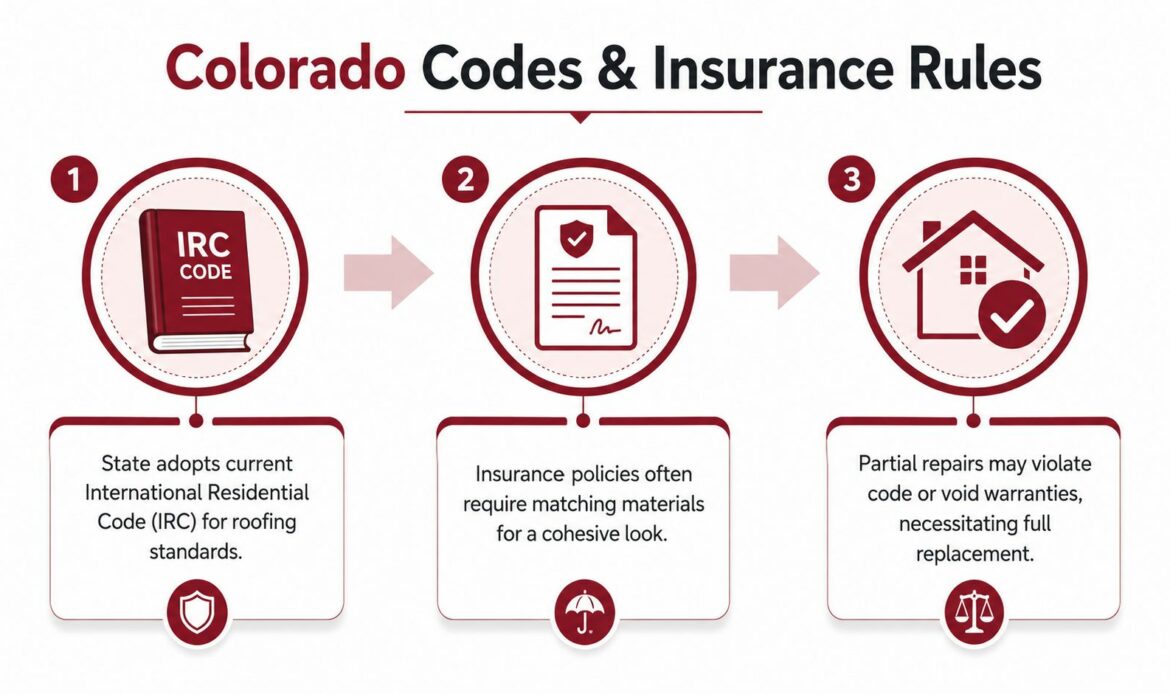
Code can pull the whole job forward
A common field rule is that once roof work reaches around 25% of the roof area, the system may need to be brought up to current code across the affected portion, which can push the project toward full reroofing rather than isolated repair. In our climate, that usually also means attention to ice-and-water shield or other weather barrier requirements where the code and installation details call for it, plus proper flashing and ventilation installed to current standards.
The insurance side matters just as much. Policy language, depreciation, and the difference between RCV and ACV can leave the homeowner carrying more of the cost if the supplement isn’t documented well. That’s why replacement decisions aren’t only about shingle condition. They’re about whether the repair leaves you with a mismatched roof, a code problem, or a hidden gap in coverage.
For a plain-English overview of claim coverage questions, see does insurance cover roof replacement.
Why matching can make a repair fail
Even when the damaged area is small, old product lines can be discontinued or faded beyond a clean visual blend. A roof that technically “matches enough” from the street may still look patched and out of place in a neighborhood where homes sit close together. Insurers and contractors know that mismatch can create a practical replacement issue even if the damage itself isn’t catastrophic.
That’s the hidden reason homeowners often hear a contractor push for full replacement after a storm. The contractor isn’t always being dramatic. Sometimes they’re reading the code, the product availability, and the carrier’s claim structure at the same time.
In these situations, storm damage roof replacement may be more practical than attempting repairs with incompatible or discontinued materials.
Choosing a Licensed Colorado Springs Contractor You Can Trust
Storm season brings out two kinds of roofers. One group lives here, carries the right insurance, and expects to be here after the claim closes. The other group shows up after the hail, asks for a fast signature, and disappears before the warranty or final inspection matters. Homeowners in Colorado Springs need the first kind.
Choosing an experienced storm damage roof replacement contractor helps ensure the inspection, insurance documentation, and installation are handled correctly.
Screening matters more than the sales pitch
A trustworthy contractor can show a Colorado license or registration status, proof of general liability and workers’ compensation coverage, and a written scope of work tied to the property. They should also have a real physical presence in El Paso County and references that sound like actual neighbors, not canned testimonials. If they can’t answer basic questions about ventilation, ice barrier details, or city inspection requirements, keep looking.
Use a neutral checkpoint when you compare companies, and verify contractor licensing rules before you sign anything. That one habit catches a lot of avoidable mistakes.
A roofer who wants full payment up front, won’t give a written scope, or avoids giving you an address is handing you a risk, not a solution.
Red flags that matter here
After a hail event, door-knockers flood neighborhoods from the Westside to Stetson Hills. Some are legitimate, many are not. The biggest warning signs are simple. No local office, pressure to sign the same day, no proof of insurance, and no willingness to explain how the job will pass city or county inspection.
7 Summits Roofing fits the opposite model. It’s a local Colorado Springs contractor with a physical Front Range base, 250+ years of combined experience, and a workflow built around insurance claim management as well as installation. That matters because storm damage roof replacement is rarely just a hammer-and-nail job. It’s a documentation, code, and scheduling job too.
The Storm Damage Roof Replacement Process Step by Step
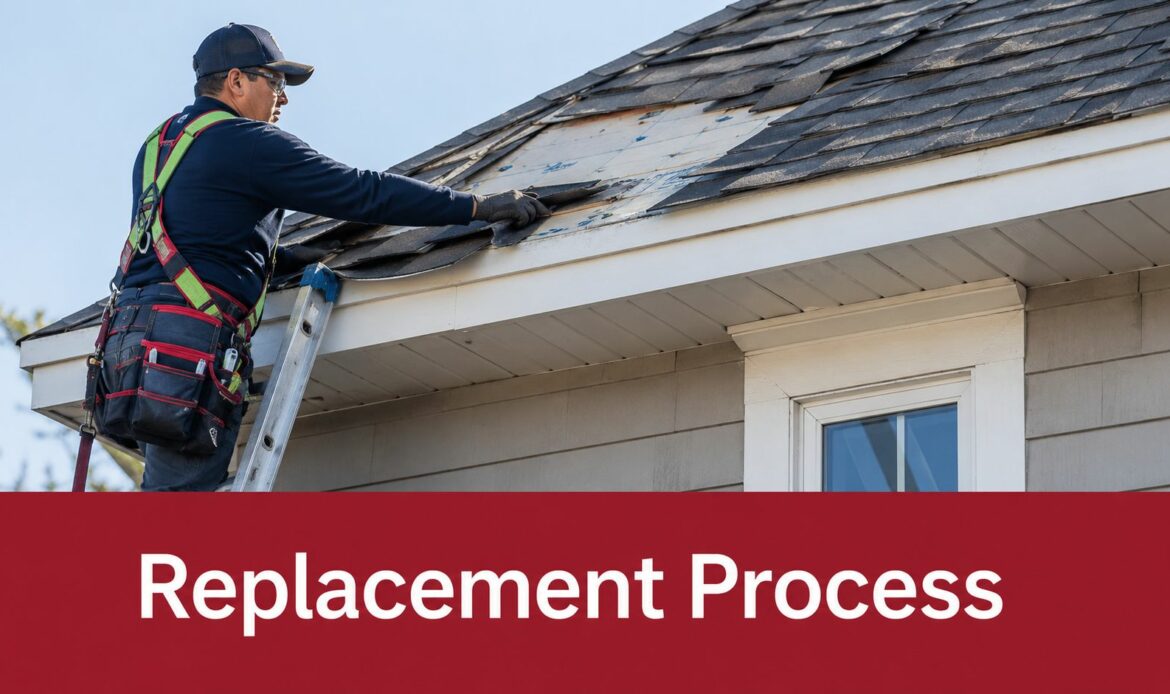
A real replacement starts long before shingles come off. First comes the inspection and written estimate, then the claim file, then the adjuster meeting, then supplementing if the field conditions show more damage than the first estimate captured. If the roof is approved, the contractor pulls the permit through the proper local authority, orders the materials, and schedules the work once everything is in hand.
What happens on the property
The actual build starts with tear-off and decking inspection. That’s where hidden rot, delamination, or fastener pull-out shows up, and it’s the step homeowners worry about most because it can change the scope. If the deck is sound, crews install the underlayment and any required weather barrier, then handle flashing, ventilation, and the chosen roofing system to manufacturer instructions and code.
During storm damage roof replacement, each installation stage contributes to the new roof’s resistance to future hail, wind, and moisture exposure.
If the roof is asphalt shingle, impact-resistant shingle, tile, or metal, the installation details still need to match the product spec. A quality crew finishes with magnetic cleanup for nails, a walk-through of the finished roof, and the final city inspection. For homeowners who want a broad view of vetted storm restoration resources, find certified storm damage pros can help frame the contractor search.
Timing you can actually count on
Once materials are on site, most single-family storm damage replacements take one to three days of active work. The variable that slows homeowners down isn’t usually the roof itself, it’s insurance response time and supplement approval. That’s where a contractor who manages the claim, not just the labor, saves a lot of back-and-forth.
If the deck is opened and wet, or the house needs a bigger dry-in before full replacement, the schedule can stretch. That isn’t a sign of poor planning, it’s a sign the crew found the problem before it became a failure.
Cost Factors, Warranties, and How 7 Summits Roofing Manages the Claim
A Colorado Springs roof quote moves up or down based on real field variables, not just square footage. Roof pitch, access, number of stories, and the material you choose all matter. So do decking repairs found at tear-off, code-required flashing or ventilation upgrades, and disposal fees for the tear-off debris. Understanding these variables helps homeowners evaluate storm damage roof replacement costs and compare contractor estimates more accurately.
Verisk’s 2025 U.S. Roof Report puts the average residential replacement cost at $17,631 in 2025, which was 33% higher than the 2021 to 2024 average, and reported a $23 billion total residential roof replacement cost value even after a quieter hurricane season reduced claim frequency. It also said non-catastrophic wind and hail roof claims rose from 17% to 25% of all residential claims between 2022 and 2024, which is one reason Front Range replacement work keeps showing up even outside named storms. Those numbers are useful because they match what homeowners are feeling on real quotes, rising labor, rising material costs, and more hail-and-wind driven claims. Verisk’s 2025 U.S. Roof Report ties those market shifts directly to current roof economics.
What changes the quote
The material choice is a big one. On this side of the state, many homeowners ask about Class 4 impact-resistant shingles because they want a harder-wearing roof in hail country, and that choice can change both the line-item cost and the long-term risk profile. If tear-off reveals bad decking, the price rises again because the roof can’t be covered over bad substrate. The same is true when ventilation, flashing, or weather barrier details need to be upgraded to pass inspection and protect the new roof.
| Storm Damage Replacement Cost Drivers in Colorado Springs | Typical Impact on Quote |
|---|---|
| Roof size and pitch | Bigger or steeper roofs take more labor, more time, and more safety setup |
| Access and number of stories | Harder access usually raises labor complexity |
| Material choice | Asphalt, impact-resistant shingle, tile, and metal each land at different price points |
| Decking repairs | Hidden damage found at tear-off adds material and labor |
| Code upgrades | Flashing, ventilation, and weather barrier details can change the scope |
| Disposal and cleanup | Tear-off debris, hauling, and magnetic cleanup add cost |
Warranties that actually matter
Roof warranties come in layers. The manufacturer material warranty covers product defects. A certified-installer enhancement, when available, can add better coverage terms if the system is installed to the manufacturer’s rules. The workmanship warranty covers installer error, which is the one homeowners lean on if flashing, nailing, or ventilation wasn’t done right.
A useful outside reference on claim handling is making an insurance claim, especially if you want to understand how paperwork discipline shapes the result.
7 Summits Roofing’s real value is that it can keep the job in one workflow. The same team can handle the inspection, photo documentation, adjuster meeting, supplement filing, permit handling, install, and warranty registration, so the homeowner isn’t chasing separate people for each stage. If you want that managed approach, start with their insurance claims service and ask for a free inspection that ties the roof condition to the claim file before anything is torn off.
FAQ
Homeowners considering storm damage roof replacement in Colorado Springs often have questions about insurance coverage, installation timelines, and roofing materials.
How soon should I file after a hailstorm in Colorado Springs?
File as soon as you’ve documented the roof and interior. Waiting makes it harder to connect the damage to the storm event.
Can an insurance company require repair instead of replacement?
Yes, if the carrier believes the damage is limited. The contractor’s job is to document why the roof does or doesn’t cross the practical replacement line.
What if my neighbor’s roof was totaled but mine wasn’t?
That happens all the time. Different slopes, prior wear, roof age, and attachment details can change the damage pattern from house to house.
How long do hail-damage claims usually take to settle here?
There isn’t a single timeline. The biggest swing factor is how fast the adjuster inspects and whether supplements are needed.
Do Class 4 shingles help with insurance?
Sometimes they can, but discounts depend on the carrier and the policy. Ask for the insurer’s exact requirements before you choose the product.
If you’ve got hail marks, flashing dents, or leaks after a Front Range storm, don’t wait for the next round of weather to make the decision for you. 7 Summits Roofing can inspect the roof, document the damage, coordinate the claim, and rebuild the system the right way for Colorado Springs conditions. Visit 7 Summits Roofing to request a free roof inspection or quote today.